Pocket Network: The Amazon of Data
Amazon sells almost nothing you couldn’t buy somewhere else. That was never the product. The product was that you stopped checking anywhere else, and once…
Read More: Pocket Network: The Amazon of Data
Turn your API into a service AI agents pay to call. Build it with Claude, deploy it with a few clicks, and get paid on-chain for every request.
Market data, research, compliance checks, web extraction, and more, each one built by a developer and served across Pocket Network. New services arrive every day.
Write your service in any language. Claude, with the Pocket Service Builder skill, guides you from idea to a service that’s ready for the network.
Register your service and bring it online, testing on Beta first. On Windows, PSM4Win makes every step a button: about twenty minutes from a folder on your PC to a live, paid service.
Run the service audit. It checks your service against the portal’s acceptance rules on the live network: the same checks the reviewers run.
You set your price in compute units per request. Every request is metered on-chain, and you’re paid for what you serve, at a stable dollar value.
A desktop app for Windows that writes your service card, registers your service, stakes your supplier, and tests real requests, all from buttons. Turn on the Claude integration and Claude can do the work with you, confirming every transaction in the app first.
Windows 10 or 11 with Docker Desktop
Get PSM4WinEverything Claude needs to help you build, price, and deploy a service on Pocket: service cards, compute-unit pricing, supplier setup, and testing.
Download the skillCheck your service against the portal’s acceptance rules before you list it. Results are read from the live network, and nothing is stored.
Run an auditAnyone can publish a service to the network. Portals choose which services they offer their users.
Metering and payment are part of the protocol. You don’t need your own accounts, keys, invoices, or payment processing.
Most services launch with their builder as the first operator. As demand grows, other operators can serve your service too, and the network routes around any that go offline.
Every service on the Agentic Portal is a single HTTPS endpoint, paid per call over x402 or MPP. There’s no account or API key: the payment is the credential. Add the MCP server to Claude, Cursor, or any MCP client, or try any service from its page first.
An open, decentralized network for data services. Developers publish services; agents, apps, and MCP clients call them through portals and pay per request; developers are paid on-chain for the requests they serve.
You set your service's price in compute units per request. Requests are metered on-chain and settled after each session, and compute units have a fixed dollar value, so your earnings are predictable. How earnings work →
Any service that answers HTTP requests with data, such as market data, research, documents, compliance, security, government records, or AI. If you can build it as an API, you can publish it.
Most new services start with their builder as the first operator, and PSM4Win and the Service Builder skill handle the setup. As a service grows, other operators can serve it too.
Through portals, which curate the services they list. The Pocket Network Foundation's Agentic Portal lists new, original services and makes them discoverable to agents via MCP, llms.txt, and OpenAPI. See what gets listed →
Yes. Pocket serves RPC for dozens of blockchains, including free public endpoints. Public RPC →
The latest insights, announcements, and deep dives from the Pocket Network ecosystem.
Amazon sells almost nothing you couldn’t buy somewhere else. That was never the product. The product was that you stopped checking anywhere else, and once…
Read More: Pocket Network: The Amazon of DataWe’re excited to announce our partnership with AnChain.AI to address one of Web3’s persistent tensions: how do you build for compliance without abandoning the decentralization…
Read More: Pocket Network × AnChain.AI: Decentralized Infrastructure Meets Compliance IntelligencePocket Network is upgrading to v1.31 on February 10th at 11AM EST. This is a consensus-breaking change. All validators must coordinate in the #upgrades channel…
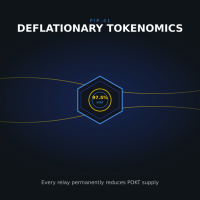
Read More: Shannon v1.31: Deflation Goes Live, Consensus Gets Harder to BreakOn January 3rd, 2026, the Pocket Network DAO unanimously passed PIP-41, a proposal that introduces a 97.5% mint ratio to Shannon tokenomics. The change is…
Read More: Pocket Network Pioneers The Deflationary Frontier